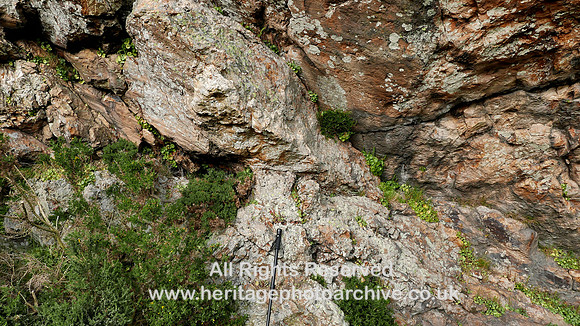
HRS 10176 Sychnant Pass, slickensides in rhyolite L7740555 (2)
At the top of Sychnant Pass near Conwy, there are excellent exposures of the volcanic rock Rhyolite. Many of the exposures of the rock show faults or fractures and along some of the fault planes there are cavities which presumably once held hot gases. The fracturing probably occurred during the 'eruptive' stage when the rock was still plastic in nature. The Rhyolite also forms the bulk of the nearby mountain known as Alltwen. It is thought that the 'Alltwen volcano' erupted during the Ordovician period some c550 million years ago and would have formed an island in the sea with volcanic ash raining down on to the ocean floor. Conwy Rhyolite Formation - Rhyolite. Igneous Bedrock formed approximately 451 to 461 million years ago in the Ordovician Period. Local environment previously dominated by eruptions of silica-rich magma. Setting: eruptions of silica-rich magma. These rocks were formed from viscous to semi-mobile magma, rich in silica. It rose to the surface and erupted as sticky lava from steep-sided volcanoes. These eruptions are commonly associated with subduction and mountain building processes and often accompanied by feeder dyke and sill intrusions.
No EXIF information is available
Categories & Keywords
Category:
Subcategory:
Subcategory Detail:
Keywords:conwy, cymru, faulting, faults, geology, igneous, pensychnant, rhyolites, rocks, slickensides, snowdonia, sychnant pass, volcanic, wales